sábado, 29 de novembro de 2014

Classification of Organisms

In order to comprehend a little better the vast diversity of organisms in nature, we have looked for classifications systems. Traditionally, animals have been classified based on the morphology (shape and structure, or simply "how they look like"). This led to the creation of the 5 kingdoms. Nevertheless, a better and more accurate system of classification is used today. Now, organisms are based on their:

  1. Phylogenetics;
  2. Cellular complexity;
  3. Energy Source;
  4. Carbon Source.

Classification based on phylogenetics

Phylogenetics is just a fancy word for molecular information, specifically ribosomal RNA gene sequence. Interesting enough, each organism has a specific sequence. Therefore, by comparing the sequence of genes in different organism we can see how similar they are from each other. This led us to assume that all organisms could be grouped into three different domains: (1) eukaryota, (2) bacteria, and (3) archaea.


  1. Eukaryota include organisms that are relative complex compared to their other domains. They have bigger and more complex cells and membrane bound organelles also.
  2. Bacteria are found in several forms and shapes. These are single-celled organisms that have a great diversity on ways to metabolise energy. Bacteria also do not have membrane bound organelles like eukaryota organisms.
  3. Archae organisms are very similar to bacteria, so similar that they were once formerly considered to be bacteria! Nevertheless, by comparing rRNA, it was concluded that they belonged to different domains. These organism have very usual shapes, and live in very extreme environments, such as high salt concentration, acidic water, or thermal hot springs.
A weird fact is that the organisms from the domain archae, in phylogenetic terms, is more similar to the organism in Eukaryota than it is to the ones in bacteria. This can only suggest that these two similar domains have been diverged from a common ancestors.


Classification based on cellular complexity:

When classifying animals, we must analyse in detail the complexity within the organism. Therefore, we will divide the organisms based on the complexity of their cells. This leads us to two types of cell: (1) Prokaryotic, and (2) Eukaryotes.

  1. Prokaryotic cells are small and simple when comparing to eukaryotes, therefore, having a higher surface-to-volume ratio. The do not have membrane bound molecules, and its genetic information is all around the place within the cell. By being small though, prokaryotic cells don't need much in order to maintain themselves.
  2. Eukaryotic cells are way bigger and more complex. They do have membrane bound molecules, and their genetic material are located in a membrane bounded nucleus. These membrane bound molecules are very important because they allow specific compartments to carry out specific function like energy production. This allows this big cells to maintain themselves.
There are two very important misleading ideas in this topic:

- The first one is regarding the uni-cellular organisms. These are not necessarily bacteria or archea. Some are considered to be eukaryota.
- The second one is the prokaryotic organisms are not always similar to each other, we have already seem that archea is very similar to eukaryota and not to bacteria.

Interesting enough, we can think about relationships between prokaryotes and eukaryotes. Think about your mouth, there are billions of prokaryotes organisms living there, in a symbiotic relationship.

There is a theory called endosymbiotic theory. It suggests that some organelles in eukaryotic cells such as mitcochondria and chloroplasts were originated from prokaryotes! And there is some evidence for this statement: There are many symbiotic and endosymbiotic association today, these organelles have their own DNA and divid by binary fission (just like prokaryotes), and their ribossomes are more similar to prokaryotes than to eukaryotes.

Classification based on energy and carbon source

Organisms that acquire the energy from the sun are said to me phototroph, other organisms which have their energy coming from the chemical bonds of molecules are said to be chemotroph. We also know that there are two types of chemotrophs: those who get energy from organic chemical compounds (chemoorganotrophs), and those who get energy from non-organic chemical compounds (chemolithotrophs).
Now we will learn that the source of carbon can actually influence on the classification of organisms.
Those organisms that have their carbon source from carbon dioxide are said to be autotrophs, and those who get from organic compounds are said to be heterotroph. When naming, we put both energy and carbon source names into one.
For example, plants are said to be photo-auto-trophs, because they get their energy from the sun and the carbon dioxide is their source of carbon. Us, humans we are chemo-organo-hetero-trophs. Can you say why?

Summary: Phylogenetic classification of organisms based on rRNA sequences has led to classification into theree domains in life - bacteria, archae, and eukaryota. Although archae are prokaryotic cells, they are more closely genetically  related to eukaryote than bacteria as is shown by the examples in the text.  The classification of organisms based on energy source (photo- or chemo-) and carbon source (auto- or hetero-) lead to six different classes.


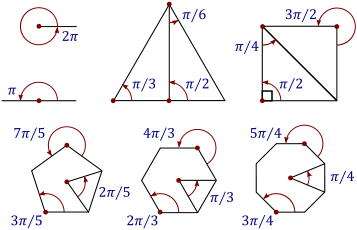
terça-feira, 18 de fevereiro de 2014

Unit Circle

In mathematics, a unit circle is a circle with a radius of one. The unit circle can be used in trigonometry, when placed in a Cartesian coordinate system, so that its center is at the origin (0,0).
Now, if we have (x,y) as a point on the unit circle, and knowing that the radius of the circle is equal to one, we may form a triangle and therefore acquire a equation, called the equation of unit circle: x2 + y2 = 1.  
Now, let's get more into trigonometric function of the unit circle. If we have a point on the unit circle (x, y) and we form a triangle with it, a angle "t" will be formed.
Do you remember the definitions of cosine and sine? Well, if you do, you will know that, considering the radius (hypotenuse) being equal one, cos(t) = x and sin(t) = y. We also already know the equation of the unit circle (x2 + y2 = 1). Now let's sub the x and y with cos and sin. This will result in cos2(t) + sin2(t) = 1   

Knowing this equation, it is easy to determine points and angles on the unit circle. However, to be more practical you must memorise the unit circle, not only the angles, but the radians. 

segunda-feira, 17 de fevereiro de 2014

Angles

Co-Terminal Angles
Co-terminal angles are angles with initial side on the positive x-axis, also called standard position, that have a common terminal side. For example 30o, -330o and 390o are all co-terminal.  To find a angle's co-terminal angle, you just need to add or subtract 36o degrees, if the angle is measured in degrees, or  2 pi if the angle is measured in radians. 
Ex: Find a positive and a negative angle coterminal with a 55° angle.
55° – 360° = –305°
55° + 360° = 415°
A –305° angle and a 415° angle are coterminal with a 55° angle
Principal Angle
The principal angle is the least positive angle that a circle can provide. Always count not clock wise, therefore the principle angle is between 0 and 360. or 0 and 2 pi.
Reference Angle

The angle formed between the terminal arm and the x-axis. Also called the bow tie rule.  

Radian


The radian, until 1995, used to be the standard unit of angular measurement. Nevertheless, this unit of measurement is often used in many fields of mathematics.  Even though its unit symbol may be "radian" or "rad," it is usually omitted. Therefore, radian is called a dimensionless quantity.  


Mathematically speaking, a radian is the value of the division of a certain arc length with the radius of the arc. One radian is equal to 57.3 degrees, therefore it may be concluded that one full circle has a radian equal to . Considering that a circle has 360 degrees, therefore, one radian will be equal 180/π degrees.
When you need to convert radians into degrees, you must multiply the value you have by 180 and the divide the result by pi. If you have your values and degrees, and wants to convert to radians, take your values and multiply by pi, then divide by 180. 
The radian measure was first used in opposed to the degree of an angle by Roger Cotes in 1714. However, the term radian was only used in print form on 5th June of 1873, in examination questions set by James Thomson, at Queen's College, Belfast.  

It is important to understand the concepts of radian measures because, in calculus, angles are universally measured in this unit. The reason for this is because it can lead to a more elegant formulation of a number of important results than degrees of angles would, since radian is a pure measure based on the radius of the circle. When the results in analysis involves trigonometric functions for example, radians are used in order to have the results expressed in a more elegant and simple way. To conclude the thought: "Degrees are more practical, but radians are more elegant and mathematically easier." 

sexta-feira, 24 de janeiro de 2014

Eletricalchemical Changes

Exchange of Electrons.
Two terms: Oxidation and Reduction. 
Oxidation: - Any reaction with oxygen;
-Loss of Electron.
Reduction: - Any reaction that produced metal from ores;
- Gain of Electrons. 
REDOX reaction: There is gaining and losing of electrons. 

Oxidizing agent (OA) is defined as the one entity that will donate electrons, therefore promoting oxidation on the other entity.
Reduction agent (RA) is defined as the one entity that will receive that electron, therefore promoting the other entity. 

DOUBLE REPLACEMENT, OR ACID AND BASE REACTIONS ARE REDOX

quinta-feira, 23 de janeiro de 2014

Thermal Stability


Thermal stability is the tendency of a compound to resist decomposition when heated. Which means that a substance that has the greates decomposition molar enthapy is the one with greates thermal stability. Remember that IF MORE NERGY IS RELEASE WHEN A COMPOUND IS FORMED, THAN IT TAKES MORE ENERGY TO DECOMPOSE IT.

Hess' Law

When you leave you house to go the gym, you may take root 1, or maybe you can take root 2. It does not matter how you get to the gym, as long as you do. Same applies to chemical reaction and enthalpy.
For hess' law, you must know to things:
- Whenever you switch products with reactants and vice versa, you must change your enthalpy sign and well.
-If you multiply the coefficient of the equation, you multiply the enthalpy change value as well. 

Hess' law modified 

Hess determined that you can actually find the enthalpy change of a reaction, by using the molar enthalpy of the components of the reaction.
When using the method, remember that: 
- A balanced equation is necessary;
- Molar enthalpy of formation of elements are equal to 0
- Water vapour is always produces, unless we are talking about photosynthesis, cellular respiration and closed system combustion. Which in the case, liquid water will be formed. 

r Ho
 =        
f Ho
pr Σoducts  ­        
f Ho Σ reactant